博文

Glass Fused to Steel Tanks Installation

图片
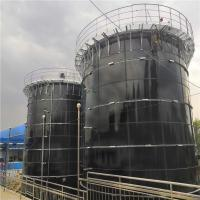
Glass-Fused-to-Steel tanks  are made from individual sections including steel plate, valves, doors or manhole covers and roofs. All the individual sections are manufactured and finished offsite, greatly reducing the time and labor involved in the field. We will show you how are the Glass-Fused-to-Steel tanks assembled in the following steps.   The preparatory stage of fabrication The installation site needs to be cleaned and treated to create a level surface. A solid base of sand or crushed stone is applied, followed by either a concrete ring wall or a full concrete slab.  The foundation of the  Glass-Fused-to-Steel tank  can be done by the customer or our tank installers.  In order to reduce the installation time for the Glass-Fused-to-Steel tank, you would better finish the foundation before all the tank delivered.           Construction phase Once the foundation is prepared, the individual panels are erected, one layer at a time,...

GFS Agricultural Water Storage Tanks

图片
In recent decades, the growth of the world's population has led to the rapid development of the agricultural industry, in which case, crop and feed storage, agricultural water storage and wastewater treatment in food production all need high-quality containment solutions. Agricultural wastes such as livestock and poultry manure and energy crops are an important part of the growth of global "green" renewable energy solutions.     GFS Agricultural Water Storage Tanks Glass-Fused-to-Steel Tanks  are widely utilized for agricultural storage tanks due to its superior performance of hygiene, sealing and various configurations according to different projects.   GFS agricultural water storage tanks are widely used as irrigation water storage tanks. Irrigation means using different technical equipment, enabling farmers to use water for their crops, when the natural resources are not sufficient. Irrigation allows for growing crops with a higher yield. In general, 94% of the wa...

What to Consider Before Choosing a Concrete Tank or Glass Fused Glass Fused Steel Tanks

图片
When considering the type of material to construct your above ground storage tank with, it is important to consider the various factors that will impact your decision.   Durability and Longevity of Concrete vs. Glass Fused Steel Tanks One main complaint of concrete tanks is cracking, leaking, and the resulting maintenance and costs required to correct these problems. Concrete is not flexible, and is subject to expansion and contraction – caused by changing temperatures or seismic activity – which overtime causes cracks and leaking. Cracks in concrete tanks can be repaired, but in some instances an expensive plastic liner is required. An untreated crack in concrete can lead to the growth of bacteria on the porous concrete which can compromise the sanitation of your tank. The most significant advantage for choosing a  Glass Fused Steel Tank  over a concrete tank is the durability. Steel will flex but not crack like concrete tanks often will. A properly maintained above grou...

Glass Fused to Steel Tank Application - GFS Agricultural Water Storage Tanks

图片
GFS agricultural water storage tanks   are widely used as irrigation water storage tanks. Irrigation means using different technical equipment, enabling farmers to use water for their crops, when the natural resources are not sufficient. Irrigation allows for growing crops with a higher yield. In general, 94% of the watering of crops is done by sprinkler or surface irrigation. The other 6% take place with the more cost intensive and sophisticated techniques such as drip irrigation.   Components of Agriculture GFS Water Tanks GFS tanks  are made of individual sections including Glass-Fused-to-Steel, roof, tank ancillaries. All the individual sections are manufactured and finished in the factory according to strict structural specifications, with quality bends, welds and surface processing. The bolt holes and openings will be cut by CNC laser cutting machine automatically. Spray the glass coating on both sides of steel panels automatically. Coating thickness is controlled w...

What are the Benefits and Limitations of GFS Tanks?

图片
GFS tanks, also known as   Glass-Fused-to-Steel tanks , are widely used in many industries for their durability, flexibility, and ease of installation. In this article, we will discuss the benefits and limitations of GFS tanks. Benefits: Corrosion resistance: GFS tanks are highly resistant to corrosion, thanks to their glass coating. The coating acts as a barrier between the tank and the environment, protecting it from rust and other forms of corrosion. Durability: GFS tanks are incredibly durable and can last for several decades. The glass coating is fused to the steel at high temperatures, creating a bond that is stronger than the original steel. This makes GFS tanks an ideal solution for storing water, chemicals, and other liquids that can cause corrosion and deterioration. Flexibility: GFS tanks are available in various sizes, shapes, and configurations, making them ideal for a wide range of applications. They can be customized to fit specific needs, and their modular design al...

Comparison between GFS Tank and Stainless Steel Tank

图片
Features and Benefits Glass-Fused-to-Steel (GFS) , also known as Glass-Lined-Steel (GLS), is the ultimate tank and silo solution utilising a proven product with significant benefits to customers, consultants, and contractors over other types of tank construction. This solution utilises the  Glass-Fused-to-Steel  finish on both the inside and outside of structures to give long term protection and the following benefits: Feature Benefit Long life span Reduced operational costs Modular bolted tank construction Rapid and cost effective site installation – Reducing project timescales, costs and requirement for on site equipment Flexibility to re-model Tanks can be extended, dismantled and re-sited giving long term asset value Optimum corrosion resistance of Glass-Fused-to-Steel Safe and secure storage, with minimal maintenance costs Complete range of diameter and height options with storage capacity solutions exceeding 50,000m3(13,200,000 US Gallons) Most cost effective s...

What Can Water Storage Tanks Be Used For?

图片
A  water tank  is a container for storing water and is widely used in the agricultural, industrial and fire fighting sectors.     Common Uses of Water Tanks   Rainwater harvesting Rainwater harvesting is very suitable for water conservation purposes, especially in areas where water is not abundant. Rainwater is accumulated and stored for reuse, rather than simply allowed to run meaninglessly to the ground.   Potable Water Storage Storage of potable water is a common application. What is extraordinary is knowing the myth of storing potable water. It is that water will expire. As the name implies, water does not expire, but it can become chemically or biologically contaminated. Once the taste goes bad, it can be purified by simply rotating the container. To store drinking water indefinitely, keep it in a cool, shaded area, not directly on a concrete surface or on harsh fumes and chemicals.   For irrigation agricultural purposes Irrigation and agricultura...