博文

Glass Fused to Steel Tank Application - GFS Agricultural Water Storage Tanks

图片
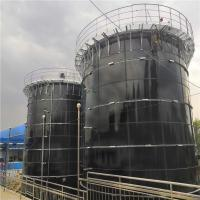
GFS agricultural water storage tanks   are widely used as irrigation water storage tanks. Irrigation means using different technical equipment, enabling farmers to use water for their crops, when the natural resources are not sufficient. Irrigation allows for growing crops with a higher yield. In general, 94% of the watering of crops is done by sprinkler or surface irrigation. The other 6% take place with the more cost intensive and sophisticated techniques such as drip irrigation.   Components of Agriculture GFS Water Tanks GFS tanks  are made of individual sections including Glass-Fused-to-Steel, roof, tank ancillaries. All the individual sections are manufactured and finished in the factory according to strict structural specifications, with quality bends, welds and surface processing. The bolt holes and openings will be cut by CNC laser cutting machine automatically. Spray the glass coating on both sides of steel panels automatically. Coating thickness is controlled w...
What are the Benefits and Limitations of GFS Tanks?

图片
GFS tanks, also known as   Glass-Fused-to-Steel tanks , are widely used in many industries for their durability, flexibility, and ease of installation. In this article, we will discuss the benefits and limitations of GFS tanks. Benefits: Corrosion resistance: GFS tanks are highly resistant to corrosion, thanks to their glass coating. The coating acts as a barrier between the tank and the environment, protecting it from rust and other forms of corrosion. Durability: GFS tanks are incredibly durable and can last for several decades. The glass coating is fused to the steel at high temperatures, creating a bond that is stronger than the original steel. This makes GFS tanks an ideal solution for storing water, chemicals, and other liquids that can cause corrosion and deterioration. Flexibility: GFS tanks are available in various sizes, shapes, and configurations, making them ideal for a wide range of applications. They can be customized to fit specific needs, and their modular design al...

Comparison between GFS Tank and Stainless Steel Tank

图片
Features and Benefits Glass-Fused-to-Steel (GFS) , also known as Glass-Lined-Steel (GLS), is the ultimate tank and silo solution utilising a proven product with significant benefits to customers, consultants, and contractors over other types of tank construction. This solution utilises the  Glass-Fused-to-Steel  finish on both the inside and outside of structures to give long term protection and the following benefits: Feature Benefit Long life span Reduced operational costs Modular bolted tank construction Rapid and cost effective site installation – Reducing project timescales, costs and requirement for on site equipment Flexibility to re-model Tanks can be extended, dismantled and re-sited giving long term asset value Optimum corrosion resistance of Glass-Fused-to-Steel Safe and secure storage, with minimal maintenance costs Complete range of diameter and height options with storage capacity solutions exceeding 50,000m3(13,200,000 US Gallons) Most cost effective s...

What Can Water Storage Tanks Be Used For?

图片
A  water tank  is a container for storing water and is widely used in the agricultural, industrial and fire fighting sectors.     Common Uses of Water Tanks   Rainwater harvesting Rainwater harvesting is very suitable for water conservation purposes, especially in areas where water is not abundant. Rainwater is accumulated and stored for reuse, rather than simply allowed to run meaninglessly to the ground.   Potable Water Storage Storage of potable water is a common application. What is extraordinary is knowing the myth of storing potable water. It is that water will expire. As the name implies, water does not expire, but it can become chemically or biologically contaminated. Once the taste goes bad, it can be purified by simply rotating the container. To store drinking water indefinitely, keep it in a cool, shaded area, not directly on a concrete surface or on harsh fumes and chemicals.   For irrigation agricultural purposes Irrigation and agricultura...

Why Are Glass Fused to Steel Tanks Resistant to Strong Acids and Alkalis?

图片
Glass Fused to Steel Tanks have superior corrosion resistance Glass Fused to Steel Tanks  are used in industrial wastewater treatment, municipal wastewater treatment, waste permeate treatment and other fields. In the actual use process, it often encounters acidic wastewater, alkaline wastewater, organic phosphorus wastewater and other toxic and harmful substances. This requires Glass Fused to Steel Tanks to have superior corrosion resistance. How does Glass Fused to Steel Tanks cope with and store these substances and materials?     What is Glass Fused to Steel Tanks? Glass Fused to Steel Tanks are assembled on site from special enameled steel plates, hoops, self-locking bolts, sealant and other accessories, of which the special enameled steel plates are titanium alloy special steel plates researched and developed by  Wansheng , with a thickness of 3-12mm. Such a coating combines the outstanding chemical and physical resistance of the enamel with the super-fine surf...

Three Factors That Should Not Be Ignored When Buying Industrial Wastewater Tanks

图片
How often do you think about your   industrial wastewater tank . If you're like most people, you don't want to think about it because thinking about it usually means you're staring at a problem. Wastewater is inevitable in production, and it is your responsibility to treat it according to the law.     Today's Business vs. Tomorrow's Business Every business wants to grow, and if your company is expanding, your future growth may be impacted by your ability to manage wastewater. Your discharge permit may be affected by increased production or product line expansion or changes, and no CEO wants to hear that something like a wastewater tank is slowing growth.   If you are now faced with fixing or replacing your tanks, consider where your business is going. You want to make sure your waste management processes are as flexible as your production processes. Therefore, you want to be able to choose tanks that can be erected quickly and efficiently, and a supplier that unders...

Comparison between Glass-Fused-to-Steel & Fusion Bonded Epoxy Coated Steel

图片
Glass-Fused-to-Steel Technology Glass-Fused-to-Steel Technology is a leading solution combines the advantages of both materials — the strength and flexibility of the STEEL and highest corrosion resistance of the GLASS. The Glass fused to the Steel at  1500 — 1650 deg. F (800 — 900 deg. C), become a new material: GLASS-FUSED-TO-STEEL with perfect anti-corrosion performance.     GFS Tank Manufacturing Procedure 1. Raw Material High-strength TRS (Titanium Rich Steel) plates specially produced for the  GLASS-FUSED-TO-STEEL Technology . 2. Laser Cutting Bolt holes and nozzle openings cut by full-automatic laser cutting to ensure more accurate and efficient production. 3. Shot Blasting All plates shall be shot blasted to SSPC SP-10/NACE2 (Near White Metal) to remove the surface oxide layer and oil pollution. 4. Bending The radian of the rolled plates shall be sampling inspected by using the radian sample according to the tank diameter. 5....